



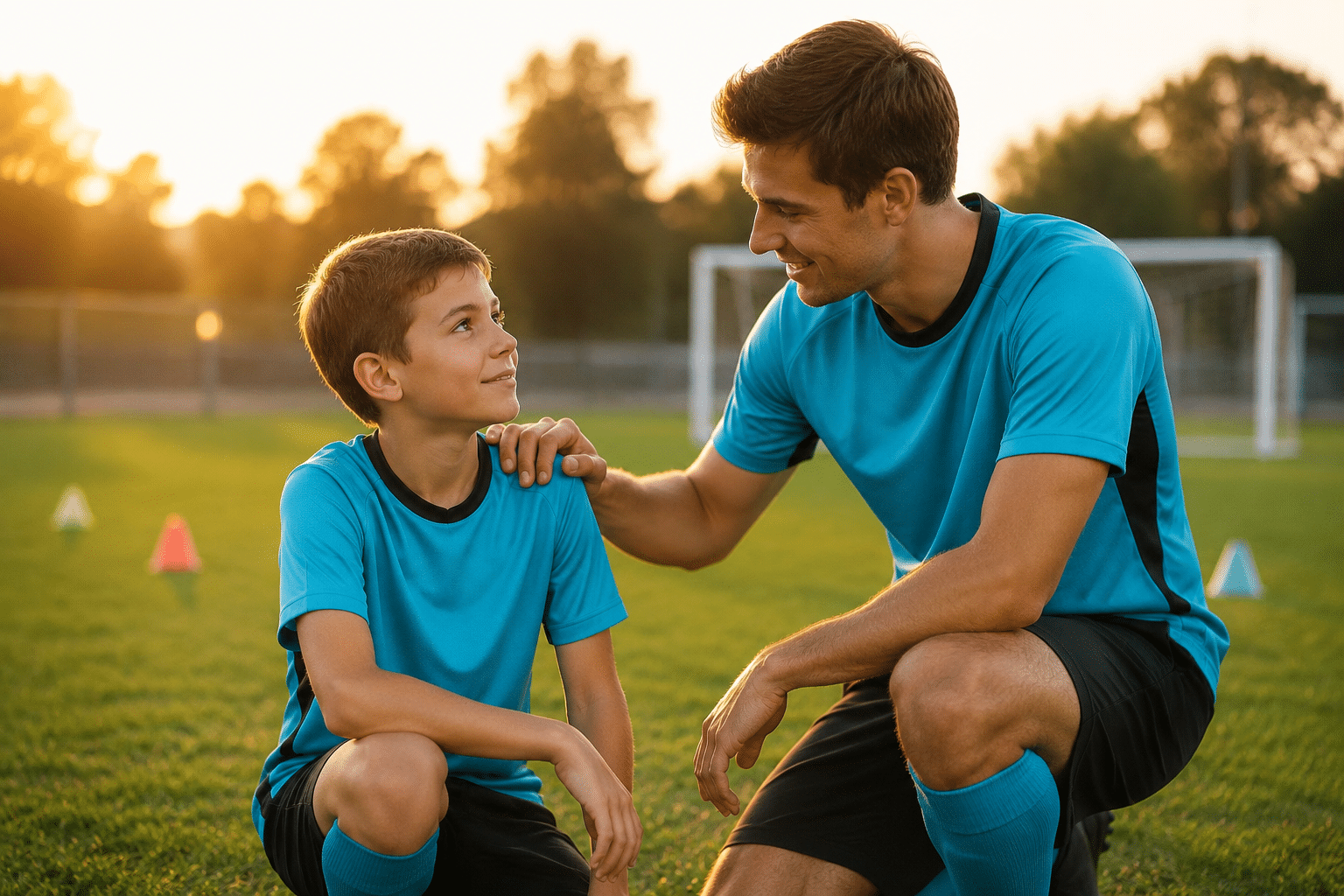
As children, we all looked up to someone. It may have been a famous athlete, a teacher, a coach, a family member or even an older teammate. A positive role model does more than inspire admiration: they can provide direction, build confidence and encourage a child to keep working towards their own goals.
Role models can play a special part in a child’s life. They can show that progress comes through persistence, that mistakes can be learned from, and that even after a difficult moment it is worth trying again. A truly positive role model is not valuable because they are perfect, but because they represent values from which a child can draw strength and guidance.
Children learn primarily through observation. They notice how adults speak to one another, how someone reacts to winning or losing, how they behave when something does not work the first time, and what they do when another person needs help.
That is why setting an example can often be more powerful than any advice. There is little point telling a child to be patient, persistent and respectful if they see the opposite around them. But when they see that the people who matter to them can admit their mistakes, work honestly, respect others and refuse to give up at the first obstacle, these values can gradually become natural to them too.
A positive role model can help a child imagine what they themselves might become. They do not provide a ready-made life path — they show what may be possible.
Through a role model, a child can learn that:
A role model can also give a child hope — the feeling that a goal which seems far away today can gradually become closer through small steps.
It is important that children do not feel they have to become exactly like the person they admire. Every child has their own personality, abilities and journey.
The goal is not for them to play in exactly the same way, achieve the same results or follow the same path. It is far more valuable for them to recognise what truly inspires them about their role model. Is it their persistence? Their courage? Their creativity? The way they treat their teammates? Or the fact that they can get back up after a defeat?
When we talk about these things with children, admiration can turn into meaningful learning.
Children often see only the spectacular moments: the goals, trophies, celebrations and packed stadiums. But behind success lie countless hours of practice, sacrifice, uncertainty, mistakes and new beginnings.
It is worth showing them this side too. Not to make success seem any less impressive, but to help them understand that even the very best were not simply given everything they eventually achieved. They made mistakes, lost, became tired and faced difficult situations too.
What is often most inspiring about them is not the victory itself, but the journey they took to reach it.
In this way, children learn that results are not the only thing that matters. Effort, hard work and progress are valuable too.
A famous athlete can inspire many children, but those who have the strongest influence are often the people they meet every day.
The parent who listens patiently. The coach who encourages them after a mistake. The teacher who notices their effort. The teammate who helps someone back to their feet.
These everyday moments truly shape the way a child thinks about themselves and the world around them.
As adults, we are all role models — even when we do not always realise it. Through our behaviour, we show children every day what it means to respect others, celebrate progress, handle disappointment with dignity and try again.
There is no need to decide for a child who they should look up to. We can often give them much more by showing an interest in their choice and thinking about it together.
We might ask questions such as:
The purpose of these conversations is not to correct every answer.
Instead, they can help children understand the difference between fame, performance and genuine human values.
A good role model is not flawless. They make mistakes, learn, change and start again. That is exactly what can make them relatable and believable to a child.
Perhaps the most important thing is not exactly who a child chooses as their role model, but what they take from what they see in that person.
If they learn to believe in progress, value hard work, respect others and have the courage to remain themselves, then the role model has already fulfilled one of their most meaningful purposes.
At JenZo Football, our Development Programme is built on the same belief. We want children to become more than simply better football players.
We want them to learn perseverance, courage, cooperation and respect for one another — values that can stay with them far beyond the football pitch.
Because the greatest inspiration does not tell a child:
“Be like me.”
It tells them:
“Believe that, day by day, you can become a better version of yourself.”