



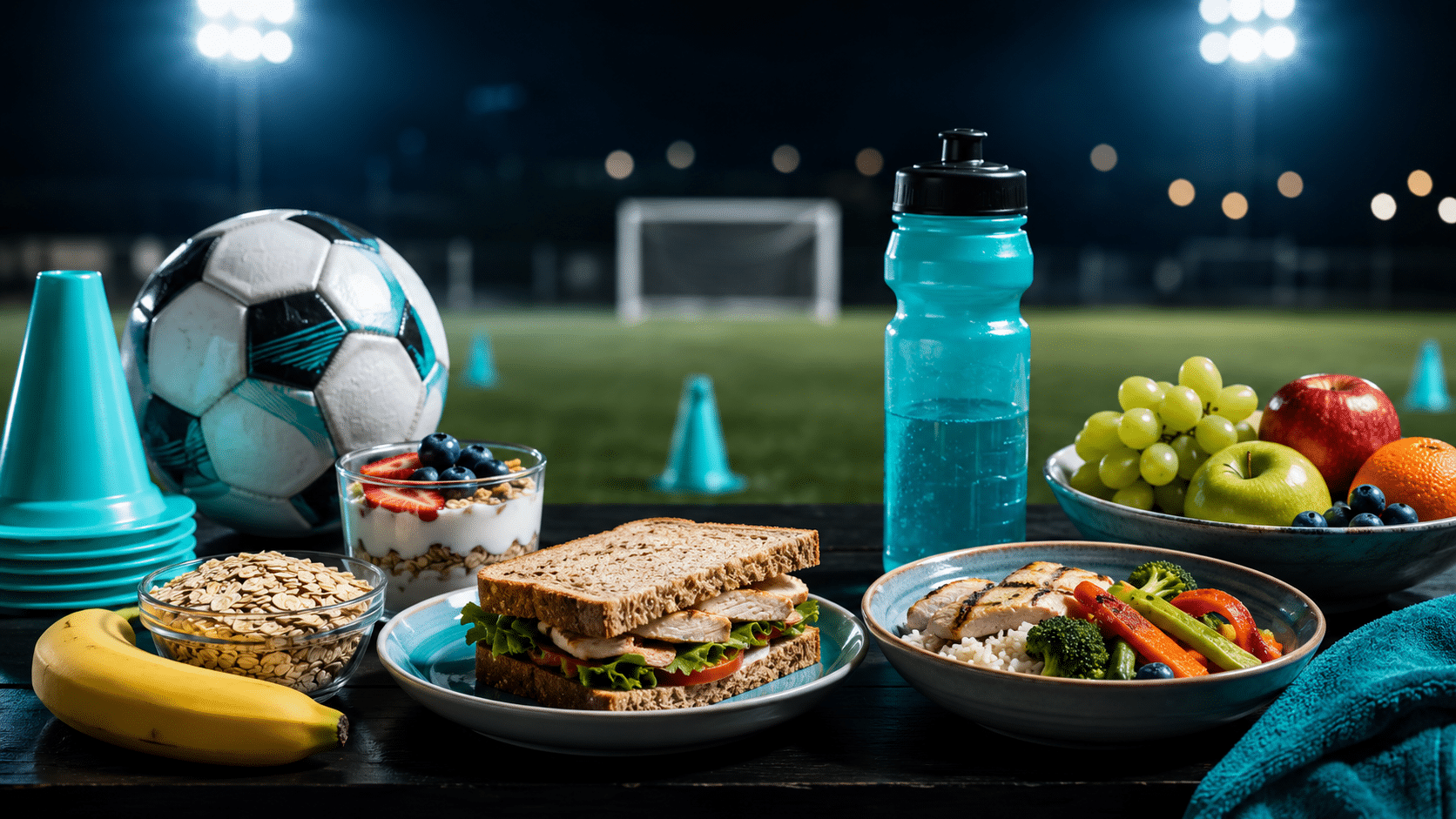
What should a child eat before training, what should they consume during exercise, and how can we support their recovery afterwards? These are questions many sports parents ask.
There is no single “miracle food” that provides the answer. What matters most is that children receive enough energy, fluids and a varied range of nutrients throughout their everyday diet.
However, eating appropriately around training can help children arrive at the pitch feeling energetic, stay comfortable during exercise and recover properly afterwards.
The diet of young athletes needs to support growth, development and regular physical activity at the same time.
The guidance below is primarily intended for active school-age children and teenagers. For younger children, the most important things are generally a balanced daily diet, regular fluid intake and respecting their natural hunger and fullness signals.
The aim of a pre-training meal is to provide enough energy without placing unnecessary strain on the stomach.
There is enough time for a normal, easy-to-digest meal. It should mainly include a source of carbohydrate, together with a moderate amount of protein.
Very fatty, heavily spiced or high-fibre foods immediately before exercise may cause stomach discomfort.
Good options may include:
There is no need to prepare a special “sports meal”. A simple, familiar family meal can be perfectly suitable.
Ilyenkor ne nagy adag ételt adjunk, hanem egy kisebb, gyorsan emészthető uzsonnát. Az UEFA példaként joghurtot gyümölccsel At this point, avoid giving a large meal. A smaller, easily digested snack is a better option.
UEFA gives examples such as yoghurt with fruit and honey, a light sandwich, or a bar containing fruit and nuts.
Simple ideas include:
Ideally, children should not try a completely new food for the first time just before training. Familiar foods that they already tolerate well are generally the safer choice.
Hydration should not begin only when a child already feels thirsty.
It is important that children drink regularly throughout the day and do not arrive at training already dehydrated. The American Academy of Pediatrics recommends drinking water during the hours before exercise and again shortly before activity begins.
The exact amount depends on the child’s age, body size, the weather and the intensity of the session, so it is not useful to apply one rigid rule to every child.
During a typical children’s session lasting around an hour, water is usually the appropriate choice.
Children should have regular opportunities to drink. Guidance from the American Academy of Pediatrics for sports parents recommends small amounts of fluid approximately every 15 minutes and considers water generally sufficient for activities lasting less than an hour.
It is usually better to drink smaller amounts more frequently than to consume a large quantity all at once.
During a normal, shorter JenZo Football training session, food is generally not necessary.
However, during a longer match day, tournament or several hours of intensive activity, an easily consumed source of energy may be useful, such as:
For most children taking part in normal training sessions or recreational sporting activities, water should be the first choice.
Sports drinks are generally unnecessary for everyday, shorter physical activity. They may have a specific role during prolonged, very intense exercise or in particularly hot conditions, but this does not mean they are needed at every training session.
An energy drink is not the same as a sports drink.
Energy drinks usually contain caffeine and other stimulants and are therefore not recommended for children and young people.
After training, there are two main priorities:
Within around 30–60 minutes after training, a smaller meal or snack containing both carbohydrates and protein can be a good option.
Carbohydrates help replenish energy stores, while protein supports muscle recovery.
Simple recovery snacks may include:
Later, this can be followed by a complete meal containing carbohydrates, protein, vegetables or fruit, and healthy fats.
UEFA examples include potatoes with meatballs, risotto with lean meat or vegetables, and pasta with tomato-based sauce.
2–3 hours before training:
rice with chicken and vegetables, with water
30–60 minutes before training, if hungry:
a banana or natural yoghurt with a little honey
During training:
a few sips of water regularly
After training:
yoghurt with fruit, cocoa or a light sandwich
Later dinner:
potatoes or pasta, lean meat / egg / pulses, and vegetables
When deciding what a child should eat before training, it is worth considering the timing, portion size and the child’s own previous experience.
Familiar, easily digested foods are usually a better choice than a new product marketed as something special or specifically designed for athletes.
There is no need to count every gram or plan every training day perfectly.
The aim is simply that the child:
Food should not be used as a reward or punishment. It should be a natural part of growth, play and development.
In cases of food allergy, diabetes, frequent digestive problems, noticeable weight loss, persistent fatigue or particularly demanding competitive sport, it is advisable to seek personalised guidance from a paediatrician or a dietitian who works with children.